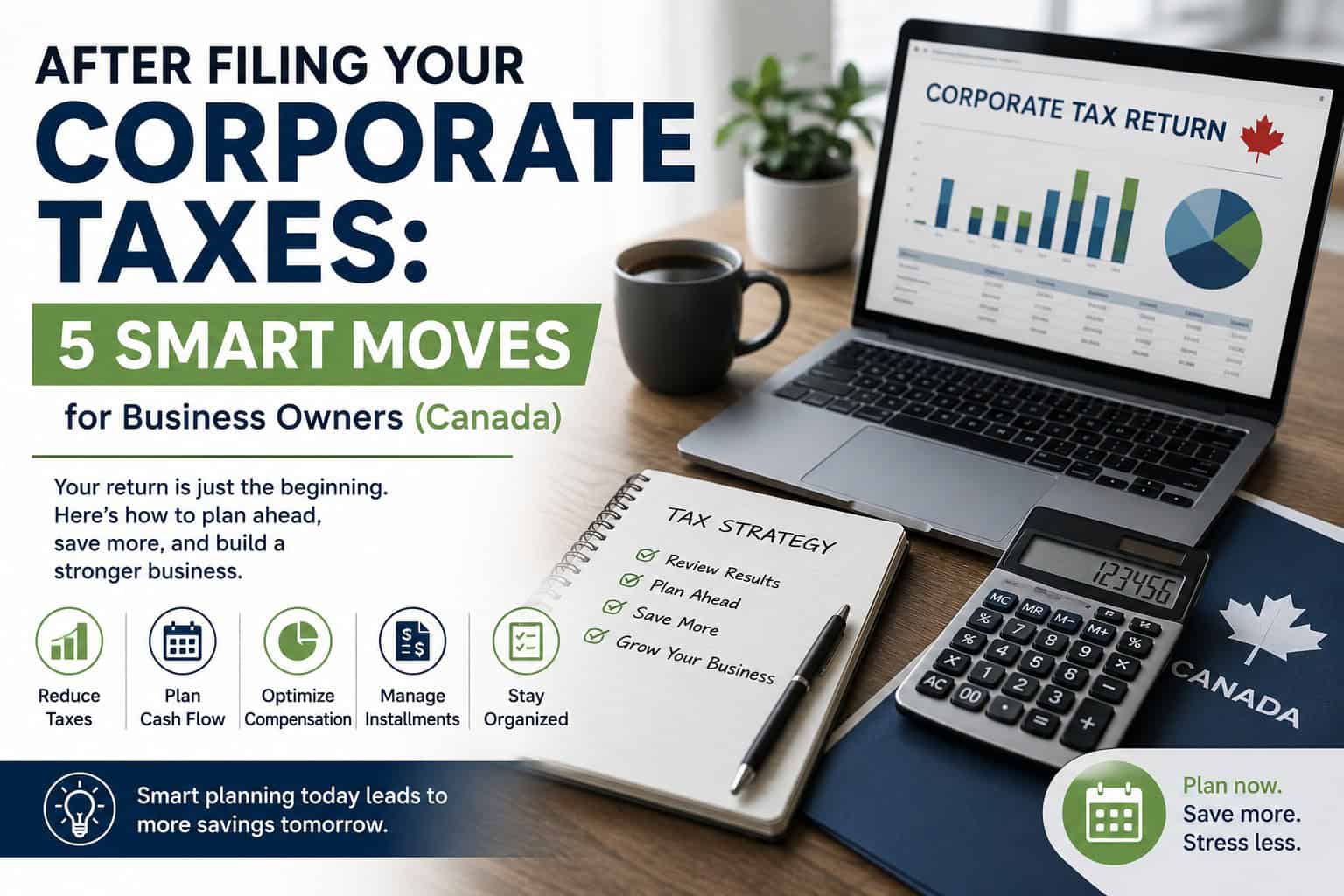
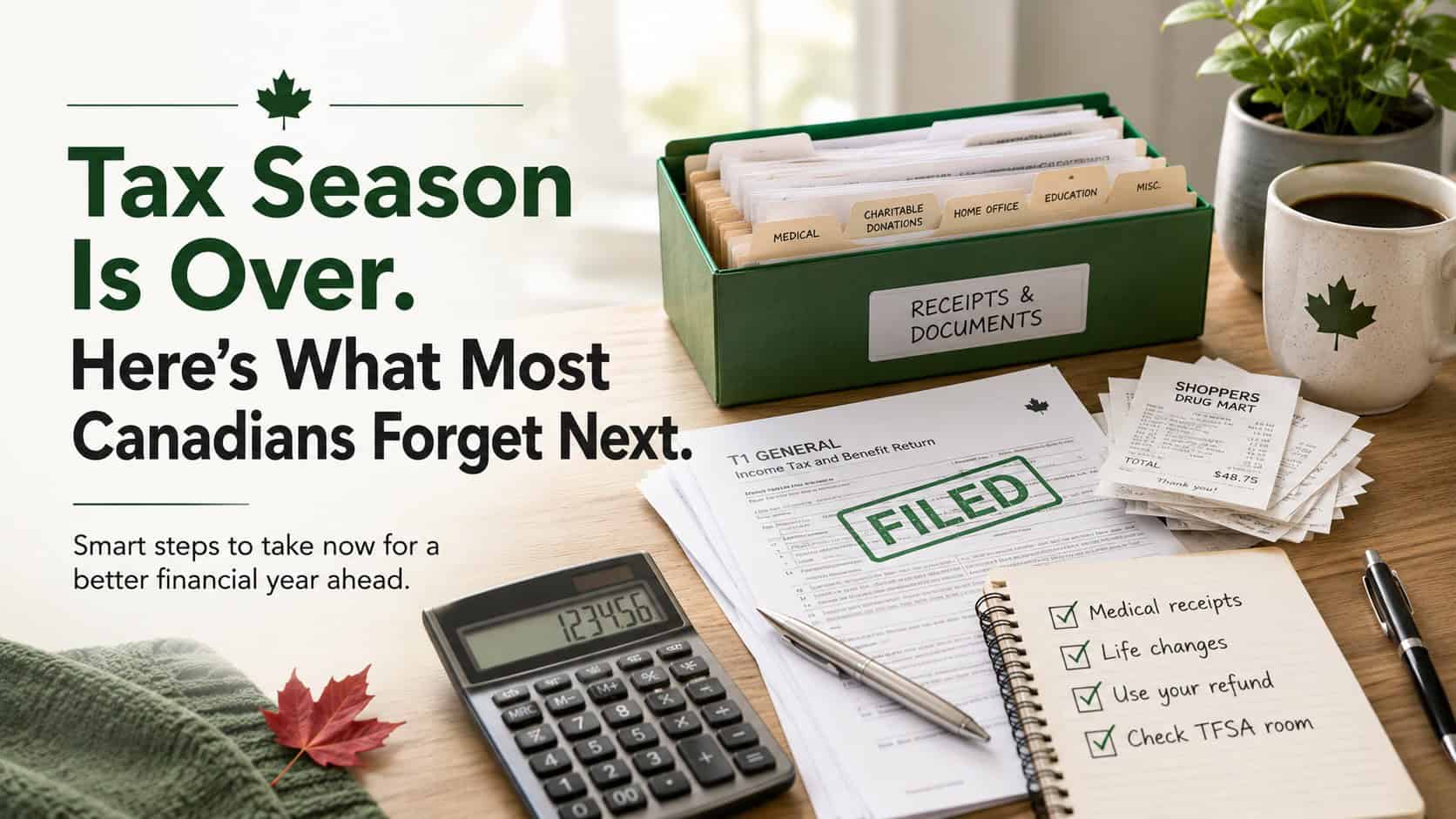
Tax Season Is Over. Here’s What Most Canadians Forget Next.

For many people, tax season feels like a finish line.
You gather your slips, track down receipts, answer questions, file the return, and then finally breathe again.
But here’s the truth: some of the best tax decisions happen after filing season is over.
Not because you need to obsess over taxes year-round, but because small habits during the year can prevent big problems later. The Canadians who feel the most prepared at tax time are usually not doing anything complicated. They are simply paying attention earlier.
Here are a few things most people forget once tax season ends, and why they matter.
1. Keep Medical Receipts Throughout the Year
Medical expenses are one of the easiest credits to miss because they rarely happen all at once.
A prescription here. A dentist visit there. Glasses, therapy, travel for treatment, insurance premiums, or other eligible expenses spread across the year.
By the time tax season comes around, many people cannot find everything.
That matters because medical expenses can sometimes create meaningful tax savings, especially when grouped properly within a household.
For example, a family with several thousand dollars of eligible medical costs may be able to reduce taxes by hundreds of dollars, depending on income and province.
The key is not waiting until March or April to start looking.
Simple habit:
Create one folder now – digital or physical – called “2026 Medical Receipts.”
Every time you pay for something health-related, drop the receipt there.
That one habit can save hours later.
2. Life Changes Can Change Your Taxes
Most people think of taxes as numbers.
But many tax changes are actually triggered by life events.
Did any of these happen recently?
- You got married or separated
- You had a child
- You bought a home
- You started a side business
- You moved provinces
- You began renting out part of your home
- You changed jobs
- You started caring for a dependent
Each of these can affect credits, benefits, deductions, filing status, or what information needs to be reported.
For example, a new child may affect benefit calculations. A separation may change who claims certain credits. A side business may create new reporting requirements. A move may affect provincial taxes.
The mistake many people make is waiting until filing season to mention these changes.
By then, planning options may be limited.
Simple habit:
If something major changes in your life, send a quick note to your tax advisor when it happens — not months later.
You do not need a full consultation every time. Sometimes a quick flag is enough to prevent missed opportunities.
3. Your Refund Should Have a Job
A tax refund feels good.
But it is worth asking: what happened to it?
Did it disappear into day-to-day spending? Did it sit in a chequing account? Did it go toward something intentional?
A refund is not extra money from the government. It usually means you paid more tax than necessary during the year.
That does not mean refunds are bad. For some people, they act like forced savings. But once the money arrives, it should have a purpose.
Here are a few ways to put a refund to work:
- Build or top up an emergency fund
- Pay down high-interest debt
- Contribute to a TFSA
- Contribute to an FHSA if you are eligible
- Put money toward next year’s RRSP strategy
- Set aside funds for future tax instalments if needed
A $2,000 refund can disappear quickly.
But if it is used strategically, it can improve your financial position for the rest of the year.
Simple question:
Before spending your refund, ask: “What would make my finances easier six months from now?”
That answer will usually point you in the right direction.
4. Your TFSA Room Is Worth Reviewing
The Tax-Free Savings Account, or TFSA, is one of the most flexible planning tools Canadians have.
You do not get a tax deduction when you contribute, but investment growth and withdrawals are generally tax-free.
That makes it useful for:
- Emergency savings
- Medium-term goals
- Investing
- Future large purchases
- Retirement flexibility
The problem is that many people do not know how much TFSA room they actually have.
Some overcontribute by accident. Others have underused the account for years.
Your CRA account may show your TFSA contribution room, but if you recently made withdrawals or transfers, it is still wise to verify your own records.
Simple habit:
Once a year, review your TFSA contribution room before making a major contribution.
This helps avoid overcontribution penalties and ensures you are using the account intentionally.
5. Keep Records Even After You File
Filing your return does not mean the documents can be thrown away.
The CRA may ask to see receipts, statements, or other proof after your return is assessed. This is especially common for credits and deductions such as medical expenses, donations, childcare, work-from-home expenses, tuition transfers, and rental costs.
That does not mean you should be afraid of claiming legitimate deductions.
It means you should be able to support them.
A good tax return is not just accurate. It is also defensible.
Simple habit:
After filing, keep your tax documents organized by year.
A folder called “2025 Tax Return Support” can include:
- Slips
- Receipts
- Donation records
- Medical summaries
- Investment statements
- CRA notices
- Supporting notes
If CRA asks, you are ready.
The Bigger Lesson: Tax Planning Is Not Just a Deadline
Many people only think about taxes in February, March, and April.
But the best results usually come from small decisions made throughout the year.
That does not mean complicated planning. It means being aware.
A receipt saved today can become a credit later. A life change flagged early can avoid missed benefits. A refund used wisely can improve cash flow. A TFSA contribution made intentionally can support long-term goals.
Tax season may be over, but your planning window is open.
One Action to Take This Month
Create three folders:
- Medical and donation receipts
- Investment and savings records
- Life changes and CRA notices
That is it.
You do not need a perfect system. You just need a system you will actually use.
Need Help Planning Ahead?
If you want to use your tax return as a starting point for better planning, we can help you review what happened this year and what to improve before next filing season.
👉 Book Your Year-End Strategy Call
💬 Referral Reminder
Do you know someone who could benefit from this kind of clarity?
Refer them to INDep Accounting and get 5% off your next return once they become a client.
Because good advice and good results are worth sharing.
INDep Accounting
Smart Strategies. Trusted Guidance. Real Results.