
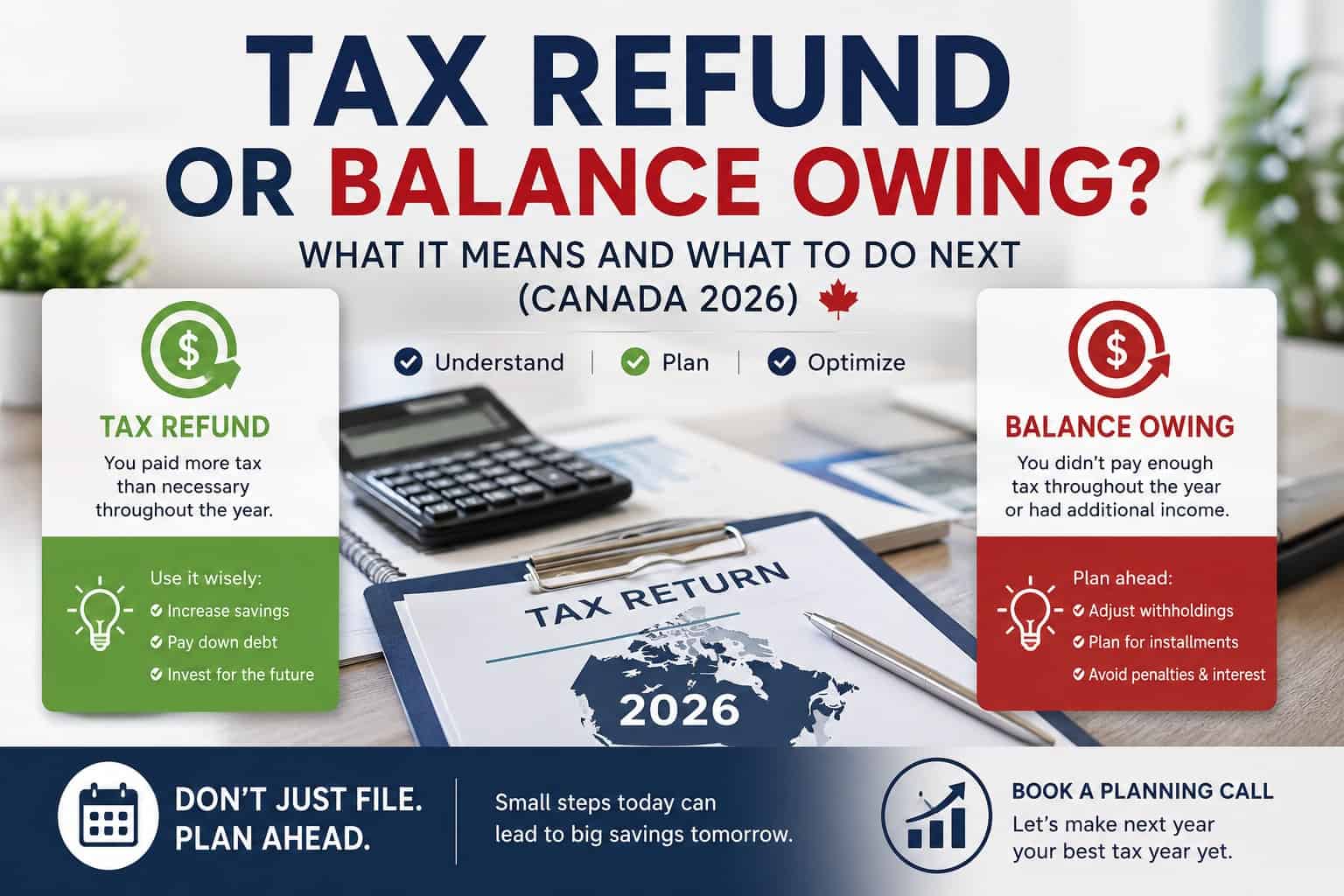
Tax Refund or Balance Owing? What It Means and What to Do Next (Canada 2026)

Your tax return is more than just a filing requirement. It’s a snapshot of your financial habits and tax strategy.
Whether you received a refund or owed taxes, both outcomes provide valuable insight into how your money is working and where improvements can be made.
Understanding what your result means is the first step toward better tax planning.
1. What a Tax Refund Really Means
Many people view a refund as a positive outcome. While it can feel rewarding, it often means that too much tax was paid throughout the year.
Example:
If you received a $3,000 refund, that’s money you could have used earlier for saving, investing, or paying down debt.
A refund is not extra income, it’s money that was overpaid.
2. What a Balance Owing Means
A balance owing can feel stressful, but it’s not always negative.
It may indicate:
- Additional income (self-employment, investments, rental)
- Insufficient tax withheld
- Lack of installment planning
Key Rule:
If you owe more than $3,000 for two consecutive years, the CRA may require installment payments.
3. How to Use Your Tax Return Strategically
Instead of filing and moving on, use your return to evaluate:
- Whether you are maximizing deductions
- Whether your RRSP or TFSA strategy is effective
- Whether your income structure is optimized
4. One Smart Move to Make This Year
Choose one area to improve:
- Adjust tax withholdings
- Increase savings contributions
- Plan for next year’s tax bill
Small changes now can significantly impact next year’s outcome.
Final Thoughts
Tax season doesn’t end when you file, it’s where planning begins.
Working with a proactive tax advisor can help you turn your tax return into a tool for better financial decisions.
💬 Referral Reminder
Do you know someone who could benefit from this kind of clarity?
Refer them to INDep Accounting and get 5% off your next return once they become a client.
Because good advice and good results are worth sharing.